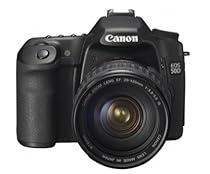
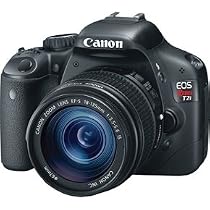
Canon EOS 50D 15.1MP Digital SLR Camera with EF-S 18-200mm f/3.5-5.6 IS Standard Zoom Lens


The EOS 50D bridges the gap between the novice and the seasoned pro with a perfect combination of high-speed and quality. It features an APS-C sized 15.1-megapixel CMOS sensor for tremendous images new DIGIC 4 Image Processor for fine detail and superior color reproduction and improved ISO capabilities up to 12800 for uncompromised shooting even in the dimmest situations. It features a refined 3.0-inch Clear View LCD (920000 dots) monitor supercharged Live View Function with Face Detection Live mode plus a number of new automatic Image Correction settings and HDMI output for viewing images on an HDTV. Pick up the EOS 50D and you'll experience true digital inspiration!

FEATURES:
  • 15.1-megapixel CMOS sensor with improved noise reduction - The EOS 50D features a newly-designed 15.1-megapixel APS-C sized CMOS sensor which is capable of recording up to 4752 x 3168 pixels with full 14-bit A/D conversion for extremely fine tonal gradation. Ready to capture images in an instant the sensor is designed to work with Canon’s EF and EF-S lenses with a conversion factor of 1.6x. It’s capable of recording at sensitivities previously too noisy for shooting in low light or subjects in motion. With a maximum ISO rating of 12800 combined with a 4-level High ISO speed noise reduction function images that would have been impossible without the use of a strobe or flash become simple to record.
  • Next generation DIGIC 4 Image Processor for faster processing - The EOS 50D operates with such effortless speed that operation is nothing short of intuitive. With instant startup times speedy autofocus and minimal shutter lag the EOS 50D is one of the fastest cameras available today. It can shoot up to 6.3 fps in bursts of up to 90 JPEGs (using an UDMA CF card) 60 JPEGs (using a CF card) consecutively or 16 RAW files so you’ll never ever miss a sho


  • 15.1-megapixel CMOS sensor with improved noise reduction

  • EF-S 18-200mm f/3.5-5.6 IS standard zoom lens included

  • Enhanced Live View shooting includes Face Detection Live mode

  • New Lens Peripheral Illumination Correction setting; HDMI output

  • Capture images to Compact Flash Type I or II memory cards (not included)


More detail ...

Canon Digital Rebel XTi 10.1MP Digital SLR Camera with EF-S 18-55mm f/3.5-5.6 Lens (Black)

The Canon EOS Digital Rebel XTi has a newly designed 10.1 MP Canon CMOS sensor plus a host of new features including a 2.5-inch LCD monitor the exclusive EOS Integrated Cleaning System featuring a Self Cleaning Sensor and Canon's Picture Style technology all in a lightweight ergonomic body. The EOS Digital Rebel XTi is compatible with all Canon lenses in the EF lineup ranging from ultra-wide angle to super telephoto lenses and including Canon's EF-S series lenses manufactured specifically for Canon's APS-C sized digital sensor. Canon's Speedlite 430EX is perfectly suited to the EOS Digital Rebel XTi. In addition to Canon's EF lenses and Speedlite flashes many other accessories are designed by Canon to work perfectly with the EOS Digital Rebel XTi. The Battery Grip BG-E3 adds a vertical shutter release and can hold two NB-2LH Battery Packs for increased shooting capacity. Canon's Semi Hard Case EH18-L can accommodate the EOS Digital Rebel XTi with a small zoom lens. An EF 18-55mm is included in the EOS Digital Rebel XTi Lens Kit. Image Sensor Type - High-Sensitivity high-resolution single-plate CMOS sensor 3 - 2 Aspect Ratio Recording Format - JPEG RAW and RAW+JPEG simultaneous recording provided USB 2.0 Hi-Speed Interface mini-B port NTSC/PAL for video output Viewfinder Type - Eye-level SLR with pentamirror Shutter Speeds - 1/4000 to 30 seconds Self-timer - 10 seconds delay 2 seconds delay with C.Fn-7-1 (mirror lockup) Continuous Shooting Speed - Approx. 3 fps (at shutter speed of 1/250 sec. or faster) Compatible Printers - CP and SELPHY Compact Photo Printers PIXMA Photo Printers and PictBridge compatible printers (via USB Interface Cable IFC-400PCU) Power Source - One Battery Pack NB-2LH Image storage on CompactFlash Type I or II type memory cards (Not included) Dimensions - Width 4.98 x Height 3.71 x Depth 2.56 inch 126.5 x 94.2 x 65mm / Weight - 18 ounces

  • 10.1-megapixel CMOS sensor captures enough detail for photo-quality 18 x 24-inch prints

  • Large 2.5-inch LCD display; includes Canon's EF-S 18-55mm f3.5-5.6 zoom lens

  • New self-cleaning dust function plus Dust Delete Data Detection in included software

  • DIGIC II Image Processor provides fast accurate image processing; Picture Style settings for added creative control

  • Stores images on Compact Flash (CF) memory cards; powered by battery pack NB-2LH


More detail ...

Canon EOS 50D 15.1MP Digital SLR Camera With EF-S 17-85mm f/4-5.6 IS USM Lens

4

  • 15.1 Megapixel CMOS sensor with improved noise reduction wide range ISO 100-3200 (H1: 6400 H2: 12800)

  • The EOS 50D features a newly-designed 15.1-megapixel APS-C sized CMOS sensor which is capable of recording up to 4752 x 3168 pixels

  • The EOS 50D operates with such effortless speed that operation is nothing short of intuitive. With instant start-up times speedy autofocus

  • DIGIC 4 Image Processor: The DIGIC 4 Image Processor offers finer details and even more natural color reproduction

  • 3.0-inch Clear View LCD (920000 dots/VGA) with multiple coatings for improved viewing and smudge-resistant protection


More detail ...

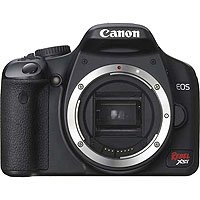
Canon Digital Rebel XSi 12.2 MP Digital SLR Camera (Black Body Only)

12.2 MP CMOS sensor plus DiGiC III Image Processor 14-bit conversion for tone and gradations extensive noise reduction technology and new Auto Optimization for superior highlight-shadow control. Black.

  • 12.2-megapixel CMOS sensor captures enough detail for poster-size photo-quality prints

  • Large 3.0-inch LCD display; Enhanced Live View function

  • DIGIC III image processor provides fast accurate image processing; improved Autofocus and framing rate

  • EOS Integrated Cleaning system plus Dust Delete Data Detection in included software

  • Stores images on SD/SDHC memory cards (not included)


More detail ...

Canon Digital Rebel XSI 12MP Digital SLR Camera (Silver Body Only)

12.2 MP CMOS sensor plus DiGiC III Image Processor 14-bit conversion for tone and gradations extensive noise reduction technology and new Auto Optimization for superior highlight-shadow control. Silver.

  • 12.2-megapixel CMOS sensor captures enough detail for poster-size photo-quality prints

  • Large 3.0-inch LCD display; Enhanced Live View function

  • DIGIC III image processor provides fast accurate image processing; improved Autofocus and framing rate

  • EOS Integrated Cleaning system plus Dust Delete Data Detection in included software

  • Stores images on SD/SDHC memory cards (not included)


More detail ...

Canon Digital Rebel XSi 12.2 MP Digital SLR Camera (Black Body Only)

12.2 MP CMOS sensor plus DiGiC III Image Processor 14-bit conversion for tone and gradations extensive noise reduction technology and new Auto Optimization for superior highlight-shadow control. Black.

  • 12.2-megapixel CMOS sensor captures enough detail for poster-size photo-quality prints

  • Large 3.0-inch LCD display; Enhanced Live View function

  • DIGIC III image processor provides fast accurate image processing; improved Autofocus and framing rate

  • EOS Integrated Cleaning system plus Dust Delete Data Detection in included software

  • Stores images on SD/SDHC memory cards (not included)


More detail ...

Canon EOS Rebel T2i 18 MP CMOS APS-C Digital SLR Camera with 3.0-Inch LCD and EF-S 18-135mm f/3.5-5.6 IS UD Standard Zoom Lens


A cautionary tale4

Too often camera reviewers insist their initial dslr purchase is a transformative event. "I couldn't believe the pictures I got from (fill in the blank)." Having used an Olympus point and shoot for years I was seduced by those claims. My pictures were good but imagine what they would be like if I used (fill in the blank). I wanted my pictures to look like the ones in the magazines. And based on the reviews I read I would get that quality if I purchased a dslr.

After exhaustive research I finally settled on the T2i. Initially I was hesitant about buying a Canon or Nikon assuming that the hype about their quality was a direct result of their advertising budget. But the press for the T2i was overwhelmingly positive and I decided all of those reviewers couldn't have been bought off.

So once the camera arrived I took it out for a test shoot. Since I am a neophyte I initially set the camera on automatic. The first thing I discovered was discouraging. Canon makes a big deal about the three-inch lcd and how many pixels there are so you can consult it in any kind of weather. And the display is beautiful indoors. But out in the sun... uh uh it is worthless. I had to duck into the shade to see anything. So if you are an advanced photographer and want to adjust your settings shot by shot either bring an umbrella or find some shade. Otherwise you will be shooting blind.

Now as for the quality of the pictures taken on automatic I was stunned all right. But not in a good way. They were no better than my Olympus (the 5060 if you are wondering) and not very sharp. I know that is heresy but that is my honest opinion.

I had previously bought Amazon's highest rated general dslr guide -- a three-book set -- and consulted it. The author advised shooting in an advanced mode and to shoot at f/8 in his words the camera's sweet spot. And I saw an immediate improvement. Not that the shots were magazine quality but I assumed that was because of my inexperience in setting the camera properly.

But then I called Canon customer service (which by the way is superb) with a question and mentioned to the guy that I was underwhelmed by my pictures. And he explained that the camera could only do so much. A key to great pictures is the lens. He pointed out that while I had purchased the camera with an upgraded 18mm to 135mm lens the quality still was not comparable to an L lens which is Canon's professional lens.

Well that clarified things for me. Unless I wanted to invest another thousand bucks or more on an L lens I had no hope of consistently getting top quality shots. Presumably I could stumble into one by accident but that was all I could hope for.

But after lowering my expectations I have begun to really enjoy this camera. Having tentatively moved to the advanced mode (I even adjust some other settings manually) I have been pleased with the pictures I have been getting. And I am really glad I upgraded to the 18-135mm because it allows me the versatility I want without needing to change lenses.

Bottom line: if you have more modest expectations going in (your friends will not ooh and ahh at your pictures and you will not see them in National Geographic) you will really enjoy this camera.

An Update (9/10/10)I always get annoyed with people who review products within days of receiving it. And yet I did the same thing. It's now been a couple of months and I felt an update was in order.

As I said previously after I started shooting on manual I saw marked improvement in my pictures. Subsequently after reading a photo blog where the guy said that he always shot with the white balance set on cloudy to make the pictures warmer I tried that with pleasing results. (I know real photographers vary all their settings dependent on the picture they are taking) but if you got this far you know already I am hardly a real photographer). The reason for this update is that the quality of my shots have improved dramatically with yes an occasional wow. Why has this happened? I have no idea. But maybe the T2i just likes me more now. I also complained that my pictures didn't have that glossy look where the colors seemed to jump out. Then one day I was fiddling with Picasa and changed the saturation on a shot of the Golden Gate Bridge. Suddenly the colors were more vibrant and the water's blue much more intense. I'm not sure if this is cheating and the "real photographers" get that effect honestly but hell I don't care. I love it. Anyway... after a couple of months I would change my rating to the maximum number of stars allowable. Just wanted to let you know.


More detail ...

Canon Digital Rebel XSi 12.2 MP Digital SLR Camera with EF-S 18-55mm f/3.5-5.6 IS Lens (Black)


Great camera one of the best low(er)-end DSLRs on the market5

My journey with DSLRs began back in 2003 with the original Digital Rebel. DSLRs changed my photography for the better like nothing else. Five years and some 25000 shots later it's still going strong. Along the way I upgraded to the Canon 30D which is a fantastic camera as well. When the 40D was announced I decided to wait until the 50D sometime in 2009 but wanted a newer backup/second body for my photography needs. So when the XSi/450D was announced it sounded like a perfect fit for my needs.


I got it from Amazon.com three days ago and have given it a pretty good workout since then having shot about 650 shots under a variety of shooting conditions and with a number of different Canon and third-party lenses. The following are my impressions.


The build feels very good. The camera feels wonderfully light yet well built. I'm 6ft tall with average size hands and the camera feels good in my hand. The battery grip to me defeats the purpose of having a small light DSLR so I opted for a Hakuba/Opteka grip (it's a plate that screws into the tripod socket that enables you to use the excellent Canon E1 hand strap with it) and I couldn't be happier. I'm not a fan of neck straps so this works well for me (see the uploaded photo for the configuration).


Most of the menu buttons on the back feel different from the ones on the original Digital Rebel and the 30D; the XSi buttons feel more tactile and have a definite "click" to them when you press them. The exception are the Exposure Lock (*) and AF selector buttons which have retained the deeper softer feel of the older cameras. Just different not better or worse for me.


The LCD is now 3" with 230K pixels. The playback images look great and probably because of the higher resolution of the sensor there's a very slight delay when you zoom in to 10x while the image loads and displays properly. People coming from other cameras or brands might not even notice it--I only did so because of the difference between it and my two other Canon DSLRs (which have lower resolution sensors). The viewing angle of the LCD screen (how clearly you can see the screen from side and up and down) is excellent; you can still see the screen holding the camera almost straight up for an overhead shot (more on this later). I'd estimate the viewing angle is about 160-170 degrees both horizontally and vertically.


The Digital Rebel has a separate status screen above the main LCD screen and the 30D had one on top of the camera so I wasn't sure if I was going to like the big LCD acting as the status screen and no top screen. I'm happy to say that this arrangement works well at least for me. The back screen makes it really easy to take all the settings at a glance. The viewfinder is much larger and brighter than that in the Digital Rebel. A humongously welcome feature for me is the always displayed ISO value in the viewfinder.


The camera is only 1/2 of the image quality equation the other being the lenses being used. Coupled with my favorite lens the Canon EF 70-200mm f/4 L telephoto lens the XSi turns out fantastic images. The supplied kit lens is very light and compact for being an image stabilized lens and turns out good performance. The IS is certainly very useful.


Two features that used to be missing from the Digital Rebels and found in the more expensive DSLRs are now featured in the XSi: spot-metering and flash exposure compensation (these may have been available in the previous Digital Rebel model the XTi as well). The inclusion of those two features make the camera a much more complete and compelling photographic tool. The timer function now has a custom mode where it'll count down from 10 seconds then take a number of shots (specified by you) in succession. No more running back and forth to reset the timer after each shot! There's also the traditional 2-second timer.


Let's talk for a minute about sensor and the ISO values. XSi/450D has five ISO values you can choose: 100 (best image quality) 200 400 800 and 1600. Higher ISO increases the camera sensor's sensitivity to light thus you can achieve faster shutter speeeds for a given lighting condition. However the trade-off is that the sensor "noise" (think grain for film photography) increases with higher ISO so you get a degraded image quality in return for less blurred photos from hand shakes (thanks to faster shutter speed). This may come in handy in situations where flash photography is not permitted such as a museum or a concert or theater. HOWEVER compared to point-and-shoot digital cameras the larger sensors of DSLRs including the XSi means that even at ISO 800 and 1600 you get very usable images right out of the camera. Running the images shot at those ISO settings through any number of third-party noise reduction software will improve them even further.


This ties in to another very useful feature of the XSi/450D that makes life easier for the photographer: The Auto ISO function. By default Auto ISO sets the ISO (the sensor sensitivity to light) between 100 and 800 (by using custom functions this can be changed to 200-1600). If you are for example shooting your kid's indoor basketball game and you know that you need a shutter speed of at least 1/200 sec to "freeze" the action then you can set the camera to Tv (shutter priority mode) and set the value to 1/200 and set the camera to Auto ISO. Then the camera will match the aperture and the ISO to achieve proper exposure at that shutter speed. With my other DSLRs setting the camera to shutter priority only allowed the camera to adjust the aperture value; ISO setting had to be adjusted manually. With the XSi/450D the ability for the camera to adjust the ISO value automatically makes it one less thing for you the photographer to worry about.


I've only tested the Live View function to see how it works but I can already see how useful it's going to be in studio and macro shootings. Just a note you can't half-press the shutter to autofocus while in Live View mode. You can either manual focus or use one of the two autofocus methods quick (the mirror flips up the LCD goes dark for a short while and flips down with focus locked) or live (the camera uses the LCD's contrast detection to achieve the focus--this method is slower than the quick method) both by pressing the exposure lock button (*) while in the Live View mode. Using either the RS-60E3 wired remote or RC-1 wireless remote in Live View mode will ONLY trigger the shutter and has no bearing on focusing.


Some people seem to be under the impression that the inclusion of the Live View feature will enable them to use the XSi/450D as they do point-and-shoot digital cameras to compose their shots. That is not the case. You can't really make a functioning use of the Live View feature unless the camera's securely mounted on a tripod or on a flat surface. Both Live View focusing modes while precise are too slow to be used for hand-held shooting.


Having said that there is one use of Live View in hand-held shooting that I've come to value. When shooting overhead or over an obstacle I can with the same hand holding the camera trigger the Live View compose the scene through the LCD monitor (even if it's out of focus it's easy to get the general framing right) disable Live View and take the photo normally. With a little practice this can be accomplished very quickly. Very handy when you're just holding the camera overhead and hoping for the best.


The Direct Print button that's been much ridiculed and maligned in most Canon cameras now double as the white balance menu button. The Set button in the middle of the four-direction arrow keys can be programmed for a number of different functions: Change image quality flash exposure compensation LCD monitor on/off (same as Display button but can be triggered by the same hand holding the camera) and Menu display (again can be triggered by the same hand holding the camera).


There is a dedicated ISO button which is also very welcome. It can easily be accessed during shooting with the right thumb thereby minimizing the interruption to shooting.


The battery life seems very good. I've shot about 500+ shots on a single charge and the status monitor is still showing charge at full.


I'm using Transcend 8GB Class 6 SDHC card with it. At ISO 100 the camera reports it can fit 396 RAW+JPG (highest quality) on it but in reality it can probably fit about 420-450 (the camera's always conservative when estimating). With RAW only it can fit 507. With highest quality JPG it can fit 1822. Note that as ISO increases so do the file sizes and thus you can store less images per card. For example on ISO 1600 the same card can only hold 323 images compared to 396 at ISO 100.


My only gripe and this is more about me than the camera is the RAW+JPG buffer. I always shoot RAW+JPG and the buffer will only hold four images at that speed (this is a limitation that's built into the camera's memory buffer system and thus using a fast memory card doesn't help--see p.64 of the manual). When the buffer's full you can take two additional images at about a frame a second then have to wait until the buffer empties (finishes writing to the memory card). When shooting RAW only it's 6 images. When shooting JPG only then it's no problem at more than 50 frames. I've found myself switching the mode dial to Sports mode when I'm shooting a fast-moving subject and the buffer simply can't keep up with it. Well that's why Canon produces different grades and ranges of DSLRs.


I've uploaded some photos that I shot of the local wildlife. Most if not all of those were taken with the EF 70-200mm f/4 L lens.


All in all it's a fantastic camera. Pretty amazing to see how far the entry-level DSLRs have come in just a few years in terms of features interface ergonomics and quality. I'm very pleased with my purchase and intend to have lots of fun shooting pictures with it.More detail ...